
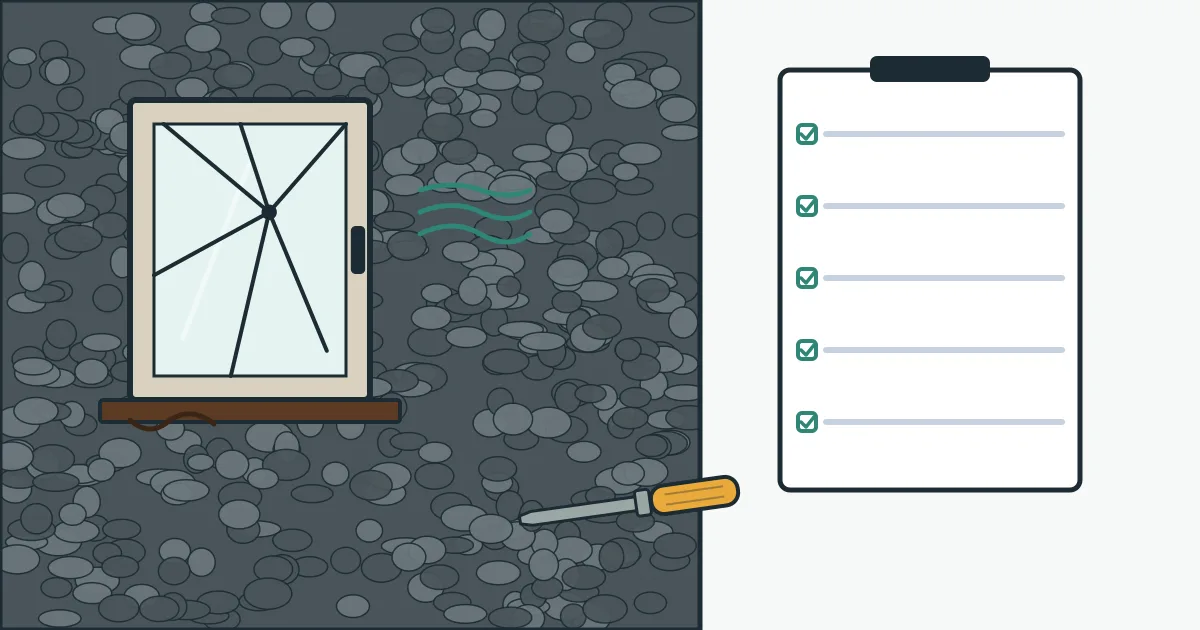
Nobody notices windows wearing out. A draught becomes normal, a handle needs a shove, one pane mists every January. Then the winter heating bill arrives and you start wondering. Walk round with this checklist, room by room, and decide whether you are looking at a repair or a replacement.
Start with the frame
- You can feel cold air near a window that is shut and locked.
- Timber sills or bottom rails are soft when you press a screwdriver tip into them.
- The uPVC has gone yellow or chalky, or the corner welds have split.
- A casement has dropped on its hinges and has to be lifted to close.
- The seals are hard, shrunken or missing in places.
- Locks and hinges are worn, and nobody makes the parts any more.
- Daylight shows around the edge of a closed sash.
Then the glass
- Moisture or a milky film between the two panes that you cannot wipe away.
- Condensation that comes back at the edges of the glass every winter.
- Single glazing, or very old double glazing with a thick metal strip between the panes.
- A chip or crack near an edge, even if it has not spread yet.
Failed glass on its own is often worth fixing without touching the frame. A frame that is rotten or warped is not. If you are unsure which problem you have, draughty, misted or rotten old windows takes each fault in turn.
Signs elsewhere in the house
- Black mould on the reveal or curtains that smell damp
- Rooms by the window that stay cold even when the radiator is on
- A noisy window on a quiet street, where you can hear every gust
- Net curtains or a sill that always feels slightly wet
- Windows painted shut, or that you can no longer open to escape in an emergency
Add up the score
Give each window one point for every frame sign. Then compare:
What your score suggests
| Points per window | What it usually means |
|---|---|
| 0–1 | Probably repairable. Fix the hardware or seals and keep an eye on it. |
| 2–3 | Getting close. Get a survey and a quote before the next winter. |
| 4 or more | Replacement is likely to give better value than repair. |
A house rarely needs every window done at once. Many people start with the worst two or three and continue over a few years. Replacing a set at the same time, though, tends to give a more consistent finish.
A Norfolk note on timber
Old timber windows in Norfolk's older houses are not automatically a problem. A well-painted softwood or hardwood frame with a sound sill can last for decades, and some are worth keeping. The issue is neglect: flaking paint, wet sills and cracked putty. If the timber is still firm all the way through, a repair and repaint may be sensible. Where the frame is soft in several places, wooden window replacement or a switch to another material is the better route.
Take photographs of each window and note its size. Then ask for two or three written quotes with the same specification, using the figures in our replacement window cost guide to judge whether they are reasonable.
What to do next
If most of your windows score three or more, start with a survey. Describe your windows once through the quote form and independent Norfolk installers can come and measure. If you have a mixed set, double glazed window replacement and uPVC windows are the usual starting points.
How to check your windows for replacement
- Check each frame
Walk round the house and press the sills and bottom rails with a screwdriver tip. Note any soft timber, split welds or dropped casements.
- Check the glass
Look for moisture or a milky film between the panes and for chips or cracks near the edges.
- Feel for draughts
On a windy day, hold the back of your hand near the edges of each closed window and note where cold air gets in.
- Score each window
Give each window one point for every frame sign you found and add them up.
- Photograph and measure
Photograph each window, note its approximate size and keep the list ready for a surveyor.
Frequently asked questions
How do I know if my windows need replacing?
Common signs include soft or rotten timber, draughts around a closed window, misted panes, dropped casements and worn locks. Several signs on the same window usually point to replacement over repair.
How long do windows last?
It varies with material and care. Many uPVC windows last 20 to 30 years, and well-kept timber can last longer. Exposure and quality of fitting also matter.
Is it better to replace all windows at once?
Not necessarily. You can start with the worst ones. Doing the whole house together often gives a more even finish and can reduce the cost per window.
Can I repair rotten timber windows instead?
Sometimes. If the rot is limited to a small area and the rest of the frame is sound, a repair can work. Widespread rot generally means replacement.
Ready to talk to a double glazed window replacement specialist?
Get Free Quotes →