
What Are Wooden Windows?
Wooden windows are timber-framed windows, usually double glazed, made either as casements or as vertical sliding sashes. Modern timber windows are made quite differently from the ones they replace. Most are built from engineered timber, with thin layers glued together to resist twisting. They are factory-primed and top-coated before they leave the joinery shop and sealed with rubber gaskets rather than relying on a tight fit alone.
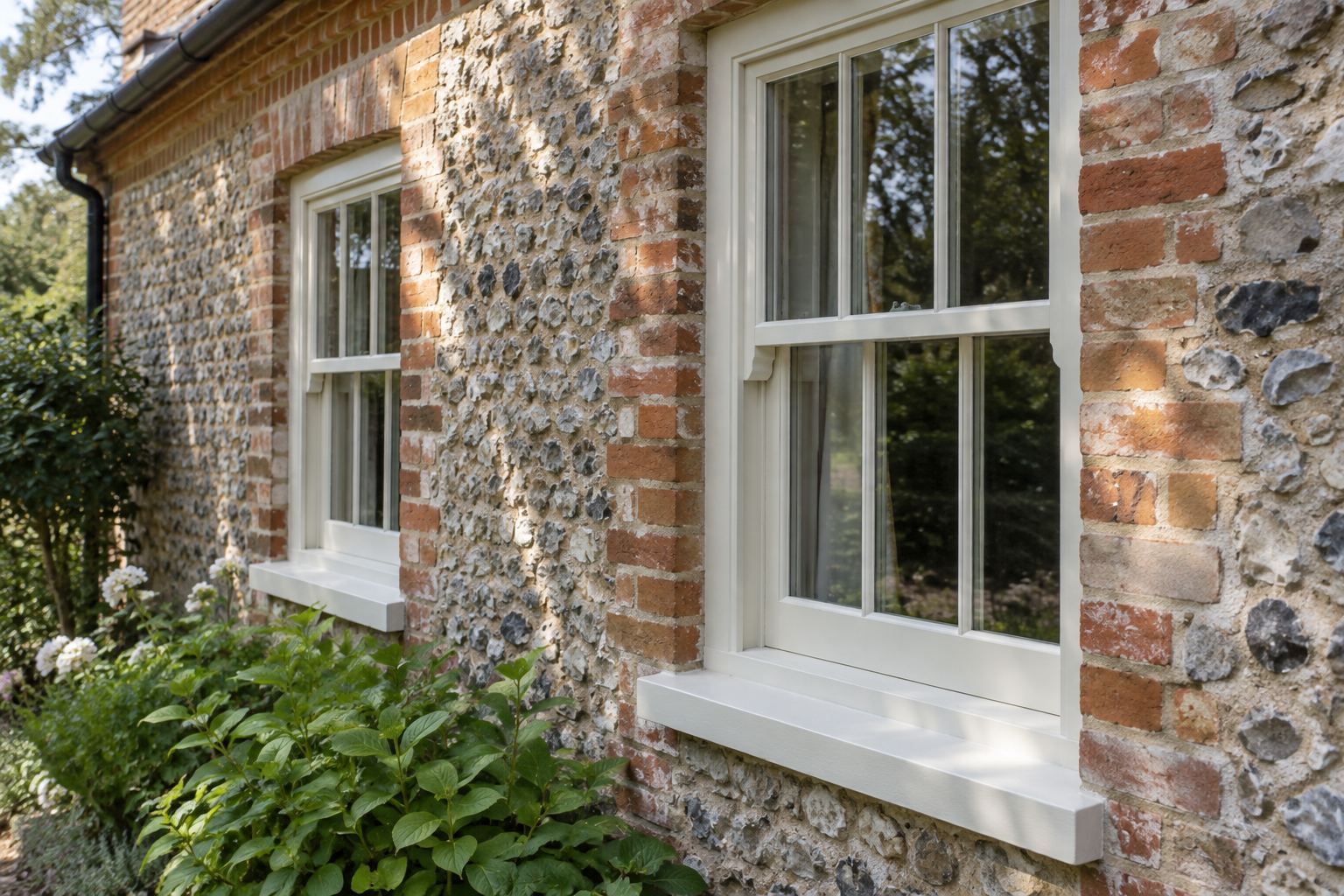
Norfolk has a huge stock of houses that were built with timber windows and still look best with them. Examples include Georgian fronts in Holt, Swaffham and Wymondham, flint cottages across the north Norfolk villages and Victorian bays in Norwich and King's Lynn. Check any heritage restrictions before choosing the material, profiles and glazing.
Signs You Need New Wooden Windows
- Soft or crumbling timber on the bottom rail, cill or lower sash, especially on south- and west-facing windows
- Paint that blisters and flakes within a year or two of being redone
- Sashes that rattle in the box, or sash cords that have snapped and left a window propped open
- Putty that has dropped away from the glass, letting water run behind it
- Joints that have opened at the corners so the frame no longer holds square
- Single glazing that you want to upgrade while keeping the traditional look of the house
Not every tired wooden window needs replacing. A good joiner can splice in new timber, re-cord sashes and draught-proof the box. Ask for an honest assessment of repair versus replacement, particularly on older or listed windows.
Timber Window Types and Timbers
- Box sash windows. Traditional vertical sliders with weights and pulleys hidden in a box frame, or modern versions using spiral balances. Double glazed sashes need heavier weights, which a specialist will allow for.
- Flush and storm-proof casements. Flush casements suit cottages and period homes. Storm-proof casements, where the sash overlaps the frame, are common on 20th-century houses.
- Engineered softwood. Laminated redwood or pine is the most common and cost-effective option. It is stable and takes paint well.
- Hardwood. Oak, sapele and similar timbers are denser and more durable, and are often stained or oiled to show the grain.
- Modified timber. Accoya and similar treated woods are highly stable and resist rot, with long coating intervals. They are a good fit for exposed coastal sites.
- Slim and vacuum glazing. Thin double glazed or vacuum units can fit slender glazing bars and are sometimes accepted in conservation areas where standard units would look too bulky.
What to Include When Asking for a Quote
Say whether the house is listed, in a conservation area or subject to an Article 4 direction, and whether you already have consent. A joiner quoting for a listed Georgian sash will survey, draw and price very differently from one quoting for storm-proof casements on a 1950s bungalow. Photos of the existing glazing bars, horns and mouldings help the maker match profiles closely.
Decide whether you want the windows painted, stained or clear-finished, and in what colour. Ask how many coats are applied in the factory, which system is used and when the first maintenance coat will be due. With sashes, state whether you want traditional weights and cords or spiral balances. Also say whether the existing box frames are to be kept, repaired or replaced.
A thorough timber window quote specifies the timber species and grade, joint construction, glazing bar type, the glass unit and its U-value, ironmongery finish and the finishing system. It should also cover making good internally, since removing an old box frame can disturb plaster and shutters.
How Much Do Wooden Windows Cost?
| Job size | Typical cost |
|---|---|
| Single timber casement window | £800 – £1,600 |
| Single double glazed box sash window | £1,400 – £2,800 |
| Whole house (8–10 windows), painted and fitted | £9,000 – £16,000+ |
These indicative figures are not quotations. Confirm the total payable including VAT, fitting, access, removal and making good; bespoke or more extensive work may cost more.
Timber is usually the most expensive frame material, and bespoke sashes, hardwoods and conservation-grade detailing add further cost. Set that against a long service life if the paint finish is maintained.
The Wooden Window Process: What to Expect
- Survey and drawings. The joiner measures each opening and records profiles. For listed or conservation work they may prepare drawings for the council.
- Consent, if needed. Listed building consent or planning permission is obtained before anything is made.
- Joinery and finishing. Frames are machined, assembled, glazed and factory-finished. Lead times of eight to twelve weeks are typical.
- Installation. Old frames are removed carefully to limit damage to brick, flint and plaster. The new windows are fixed, sealed and adjusted.
- Aftercare. You receive maintenance guidance and a guarantee covering the timber, finish and glass.
Planning Permission and Building Regulations
Check the proposed appearance as well as the opening size. On a house, a similar-looking replacement often needs no planning application, but flats and restrictions such as Article 4 directions need separate consideration. Works affecting a listed building's special character require listed building consent. Seek advice from the local planning authority for your Norfolk address before ordering. See the Planning Portal permission guide.
Agree the applicable Building Regulations route with the installer before work starts. Relevant checks can include thermal performance, safety glazing, ventilation and escape arrangements. Competent person schemes can certify eligible replacement work; projects outside their scope need an appropriate building control route. New openings, extensions and conversions may be covered by a wider application. Keep the applicable completion documents with your guarantees; see the Building Regulations guide.
How to Choose a Wooden Window Maker or Installer
- Do you make the windows in your own workshop, or buy them in? Who fits them?
- What timber, joint construction and glazing bar type do you use?
- What paint or stain system is applied in the factory, and when is the first maintenance coat due?
- Have you worked on listed or conservation-area properties in Norfolk, and can you help with the drawings?
- What guarantees cover rot, the finish and the sealed units?
- Would repair be a sensible alternative for any of my existing windows?
Frequently Asked Questions
Can I double glaze original windows in a listed Norfolk property?
It depends on the significance of the windows and the proposed changes. Seek advice from your local planning authority before ordering; works affecting the building’s special character require listed building consent.
When should wooden windows be repainted?
Follow the coating manufacturer’s inspection and maintenance schedule. Exposure and condition matter, so deal with damaged paint and open joints promptly rather than waiting for a fixed number of years.