
What Are Aluminium Windows?
Aluminium windows are made from extruded aluminium sections joined around a sealed glass unit. Modern aluminium windows are very different from the cold, condensation-prone metal frames of the 1970s. Today's systems are thermally broken: the inner and outer parts of the frame are separated by a low-conductivity polyamide strip, so heat does not pass straight through the metal.
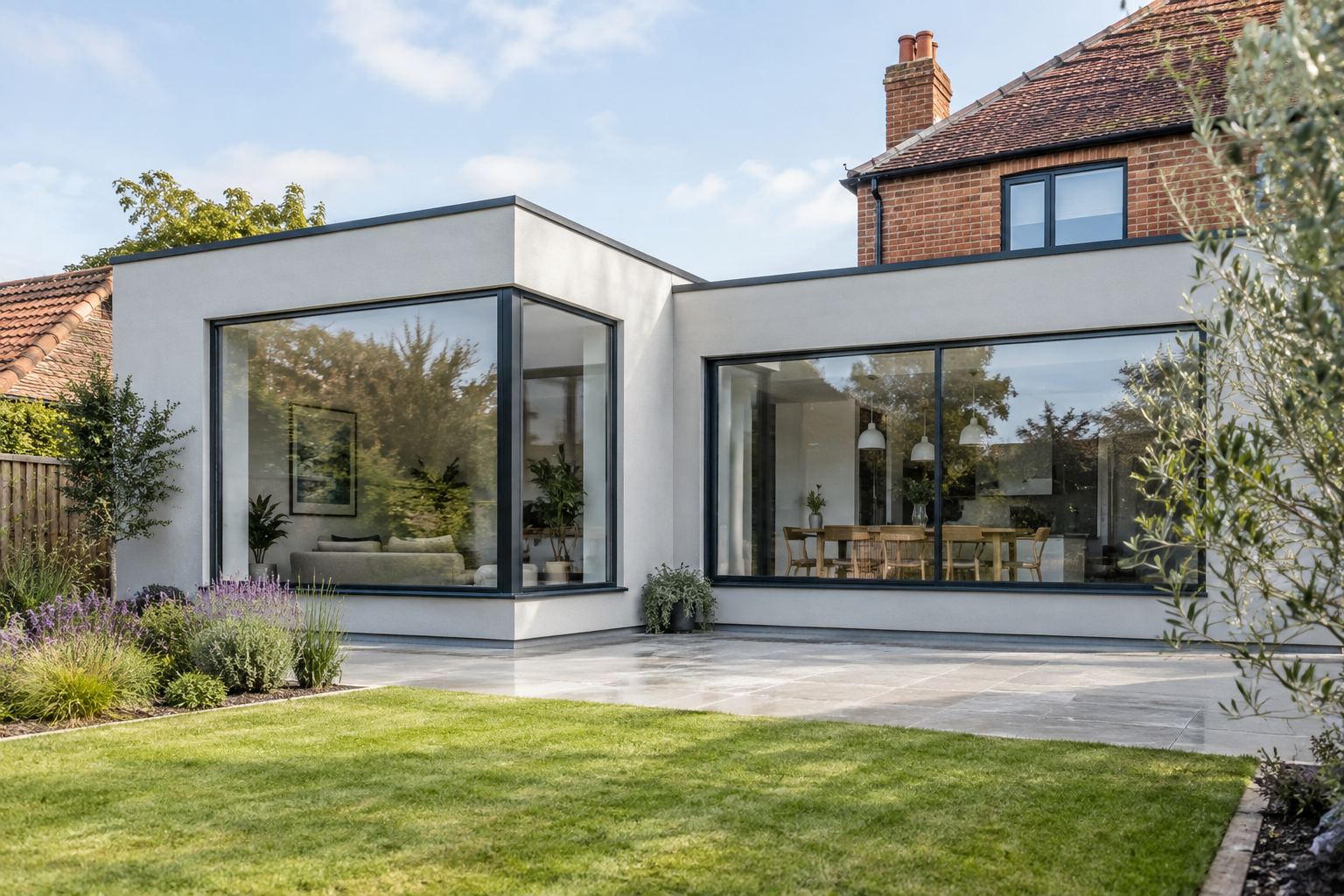
Because aluminium is strong, the frames can be much slimmer than uPVC or timber for the same size of glass. That is the main reason people choose it. More of each opening is glass, and the result looks crisp and contemporary, which suits extensions, barn conversions and the modern coastal houses going up along the north Norfolk coast.
Signs Aluminium Windows Are the Right Choice
- You want the narrowest possible frame around large panes or picture windows
- You want a factory finish, with the coating and maintenance requirements confirmed for the exposure
- You are matching new aluminium bi-folds or sliding doors elsewhere in the house
- You want a specified colour such as black, bronze or anthracite, with written finish-care guidance
- Old single-glazed metal windows need replacing on a 1960s or 1970s property
- You are planning larger openings than a uPVC profile can span without heavy reinforcement
Aluminium Window Types and Finishes
- Casement windows. These are the everyday aluminium window, in standard or flush-fitting profiles. Flush aluminium casements with slim sightlines have become popular on renovations that want an industrial or heritage-steel look.
- Fixed and picture windows. Large single panes where you want the view rather than ventilation, such as over the marshes, the Broads or open farmland.
- Tilt-and-turn and sliding windows. These are useful on upper floors and wide openings, and are available with heavy-duty hardware for larger glass.
- Finishes. Most aluminium frames are polyester powder coated in almost any RAL colour, often with a different colour inside and out. Anodised finishes are also available. For properties near the sea, ask about marine-grade pre-treatment before coating.
What to Include When Asking for a Quote
Tell the installer how far the property is from the coast or from open estuary water, and which elevations take the prevailing wind. That determines whether the supplier should specify a marine-grade pre-treatment and coastal warranty on the powder coating. It also determines whether hinges, handles and fixings need to be stainless steel rather than standard grades.
Give the RAL colour you want for each side, or ask for colour samples at the survey. Say whether the new windows need to line up visually with existing aluminium doors, a roof lantern or a glazed extension. Matching sightlines and colour across different product ranges is not automatic. If you want larger panes than the current openings, say so early, as it may involve new lintels and structural checks.
A clear aluminium quote names the window system and its thermal break, the Uw value of each window, the glass specification and the coating guarantee period. It should also state the lead time, which is often longer than for uPVC.
How Much Do Aluminium Windows Cost?
| Job size | Typical cost |
|---|---|
| Single aluminium casement window | £650 – £1,500 |
| Three-bed house, casements throughout | £5,500 – £9,500 |
| Large picture windows, bespoke colours or feature glazing | £9,500 – £13,000+ |
These indicative figures are not quotations. Confirm the total payable including VAT, fitting, access, removal and making good; bespoke or more extensive work may cost more.
Aluminium typically costs more than uPVC for the same opening, but the specific product, finish and maintenance schedule should still be checked. Large fixed panes and dual-colour finishes add the most to the price.
The Aluminium Window Installation Process
- Technical survey. The installer measures openings, checks lintels and cills, and notes any exposure or access issues.
- Specification and colour sign-off. Profiles, RAL colours, glass and hardware are confirmed in writing before the order is placed.
- Fabrication and coating. Frames are cut, coated and assembled. Lead times of six to ten weeks are common.
- Installation. Old frames come out and the new aluminium windows are fixed, packed and sealed. Large units may need two or more fitters to handle the glass safely.
- Finishing and sign-off. Trims and cills are fitted, sashes are adjusted and the job is registered with a competent person scheme or building control.
Planning Permission and Building Regulations
Check the proposed appearance as well as the opening size. On a house, a similar-looking replacement often needs no planning application, but flats and restrictions such as Article 4 directions need separate consideration. Works affecting a listed building's special character require listed building consent. Seek advice from the local planning authority for your Norfolk address before ordering. See the Planning Portal permission guide.
Agree the applicable Building Regulations route with the installer before work starts. Relevant checks can include thermal performance, safety glazing, ventilation and escape arrangements. Competent person schemes can certify eligible replacement work; projects outside their scope need an appropriate building control route. New openings, extensions and conversions may be covered by a wider application. Keep the applicable completion documents with your guarantees; see the Building Regulations guide.
How to Choose an Aluminium Window Installer
- Which aluminium system do you use, and are you an approved fabricator or installer for it?
- Is the powder coating backed by a written guarantee, and does it cover coastal locations?
- Are the hinges, handles and fixings stainless or salt-spray tested?
- What is the Uw value of the windows as quoted, not just the best case in the brochure?
- How do you handle large or heavy glass units on site?
- Will the job be registered for Building Regulations compliance?
Frequently Asked Questions
Are aluminium windows suitable near the Norfolk coast?
They can be, with a suitable system, coating and hardware. Ask the supplier to confirm suitability for your exposure and explain cleaning requirements and any coastal warranty exclusions.
Do thermally broken aluminium frames prevent all condensation?
No. A thermal break reduces heat transfer through the frame, but condensation also depends on indoor humidity, surface temperature, ventilation and installation details.