
What Is Double Glazed Window Replacement?
Double glazed window replacement means taking out existing windows, whether that is original single glazing, secondary glazing or an older generation of double glazing, and fitting new made-to-measure frames with sealed insulated glass units. The new windows go into the same openings, and the installer makes good the reveals, cills and trims so that the change looks finished inside and out.
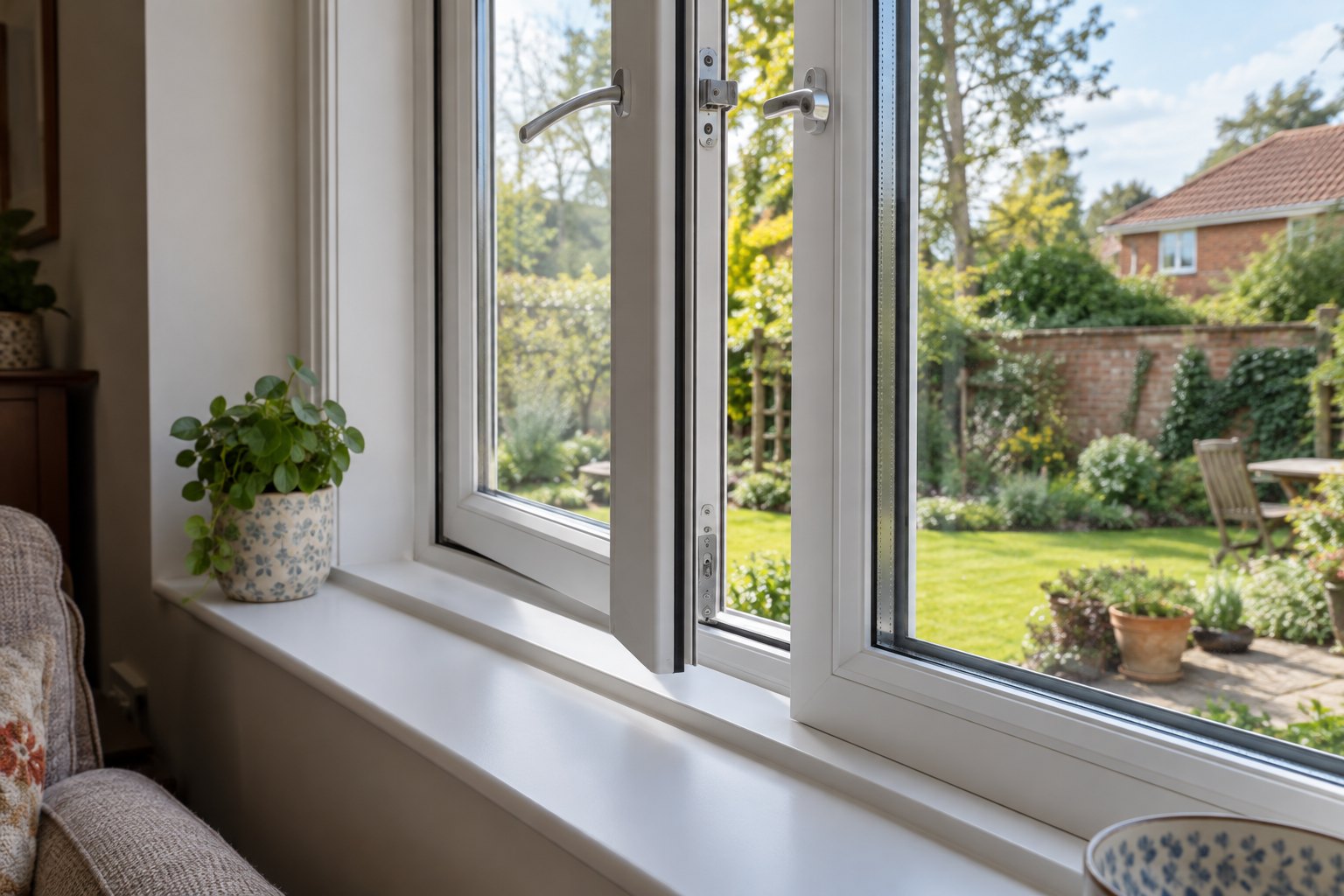
Older double glazing varies in condition and specification. An installer should look at the frames, glass, seals and hardware separately, then explain which parts need attention. For a Norfolk property with serviceable frames, a glass-only upgrade may be an option. Wider replacement can make sense where frames have deteriorated or the opening arrangement no longer suits the household.
Signs You Need Double Glazed Window Replacement
- Several units have misted between the panes, suggesting the edge seals across the house are failing at the same age
- Hinges and friction stays have worn, so casements drop and catch on the frame when closed
- Gaskets have shrunk or hardened, letting cold air in around the opening sashes on windy days
- Condensation pools on the inside of the glass every cold morning and runs onto the cill
- Locks are no longer made for the old frames, so security cannot be upgraded without new windows
- You are replacing a few windows anyway and want the rest of the house to match
These are reasons to have the windows assessed, rather than proof that complete replacement is needed. Even several misted units can sometimes be replaced within sound frames. Ask the surveyor to separate repairable glass, gasket and hardware faults from problems with the frame itself.
Replacement Window Options Explained
Replacing double glazing means making three decisions: the frame, the glass and the opening style.
- Frame material. uPVC is the most common and usually the cheapest. Aluminium gives slimmer sightlines and suits modern and coastal homes. Timber suits period properties and conservation areas. Composite (alu-clad timber) sits between them. We cover each material on its own page.
- Glass specification. A modern double glazed unit uses low-E coated glass, an argon-filled cavity and a warm-edge spacer. Acoustic laminated glass is worth considering on busy roads such as the Norwich ring road or the A47, and triple glazing is an option for north- and east-facing elevations.
- Opening style. Side-hung and top-hung casements are standard. Tilt-and-turn windows suit upper floors where you want to clean the glass from inside. Vertical sliders keep the look of a sash window in older terraces.
Most installers can show you samples of each. Seeing the corner of a real frame, rather than a brochure photo, makes it much easier to judge sightlines and finish.
What to Include When Asking for a Quote
Count your windows by room and note which ones are bays, bows or have fixed side lights, because angled bay posts and coupled frames take more time to make and fit than flat openings. Say whether any window is above a flat roof, conservatory or steep bank, since the fitter may need a tower or scaffold to reach it safely. Photos of each elevation help an installer give a rough figure before the survey.
Mention any window you rely on as a fire escape from an upstairs bedroom. The replacement must keep an escape opening at least as large as the one you have now, which can affect the choice between a casement and a tilt-and-turn frame. Tell the installer about trickle vents too. If you do not want slots in the head of the frame, ask how they plan to meet the ventilation requirements another way.
A good written quote lists every opening with its style, colour, glass specification and U-value. It should say whether internal plaster reveals will be made good, what happens to the old frames, how much deposit is taken and how that deposit is protected. It should also confirm that the job will be registered with FENSA, Certass or building control.
How Much Does Double Glazed Window Replacement Cost?
| Job size | Typical cost |
|---|---|
| Single standard casement window | £450 – £1,100 |
| Three-bed semi (8–10 windows) | £4,000 – £7,500 |
| Larger detached home, bays or premium frames | £7,500 – £10,500+ |
These indicative figures are not quotations. Confirm the total payable including VAT, fitting, access, removal and making good; bespoke or more extensive work may cost more.
These ranges assume white uPVC or equivalent, fitted into existing openings. Coloured finishes, aluminium or timber frames, triple glazing and scaffold access all push the figure up. A measured survey is the only way to get a firm price.
The Replacement Process: What to Expect
- Survey. The installer measures each opening, checks the condition of the brickwork and lintels, and agrees styles, colours and glass with you.
- Manufacture. Frames are made to order. Lead times are commonly four to eight weeks, longer for coloured or non-standard products.
- Removal. On fitting day each old window is cut out and the opening is cleaned back. Most fitters take out and replace one window at a time so the house is never left open overnight.
- Fitting and sealing. The new frame is packed, fixed and levelled, then sealed inside and out. Cills and trims are fitted and the glass units are glazed in.
- Handover and certification. The installer checks every opening and lock with you. Your competent person scheme certificate follows by post or email a few weeks later.
Planning Permission and Building Regulations
Check the proposed appearance as well as the opening size. On a house, a similar-looking replacement often needs no planning application, but flats and restrictions such as Article 4 directions need separate consideration. Works affecting a listed building's special character require listed building consent. Seek advice from the local planning authority for your Norfolk address before ordering. See the Planning Portal permission guide.
Agree the applicable Building Regulations route with the installer before work starts. Relevant checks can include thermal performance, safety glazing, ventilation and escape arrangements. Competent person schemes can certify eligible replacement work; projects outside their scope need an appropriate building control route. New openings, extensions and conversions may be covered by a wider application. Keep the applicable completion documents with your guarantees; see the Building Regulations guide.
How to Choose a Window Installer
- Is the business registered with a competent person scheme, and will it register your job?
- Who manufactures the frames and glass units, and what guarantee does each carry?
- What protection covers the deposit, and what separate insurance-backed workmanship cover is offered?
- Will your own fitters do the installation, or is it subcontracted?
- How will reveals, plaster and decoration be left after the old frames come out?
- Can you visit or contact a recent customer in your part of Norfolk?
Frequently Asked Questions
Will new windows stop condensation in my Norfolk home?
Not necessarily. Moisture between panes can indicate a failed sealed unit, while moisture on the room side depends on humidity, temperature and ventilation. Ask the surveyor to identify the cause before recommending replacement.
Can I replace windows a few at a time?
Yes, the work can be phased. Record the manufacturer, profile, colour and glass specification, and ask about future availability before assuming later windows will match.