
What Are Composite Windows?
Composite windows combine two materials in one frame, each doing the job it is best at. The most common type is aluminium-clad timber. A timber frame forms the inside of the window, and a powder-coated aluminium shell clips over the outside, leaving a small ventilated gap between the two. The timber gives a warm, natural finish indoors, while the aluminium takes the weather outside and reduces the need for exterior repainting.
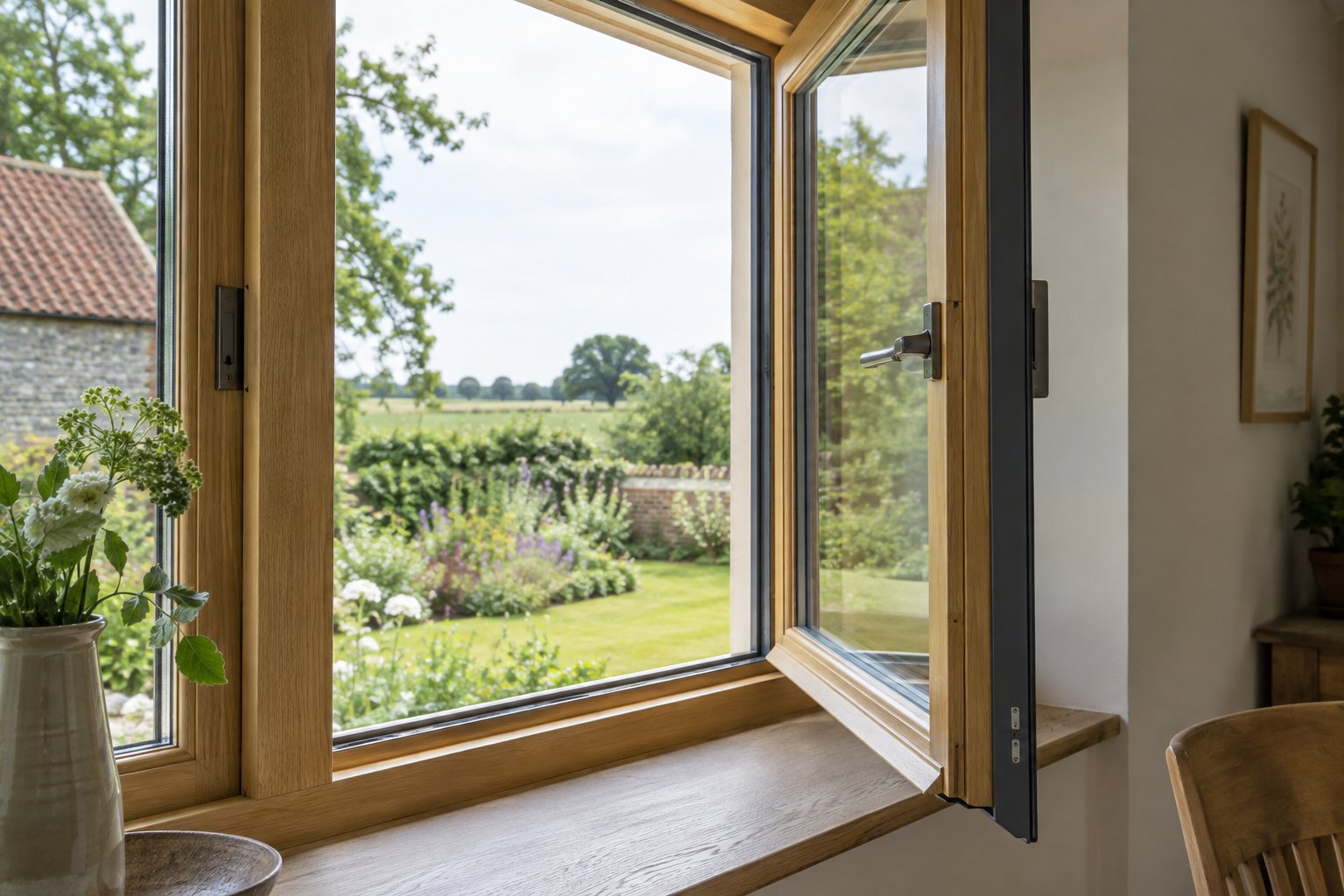
Other composites exist, including aluminium-clad uPVC and frames made from glass-fibre reinforced polymer. The idea behind all of them is the same: avoid compromising on either appearance or durability. In Norfolk they are especially popular for self-builds, barn conversions and coastal renovations where people want timber indoors but do not want to repaint exposed frames every few years.
Signs Composite Windows Suit Your Home
- You love the look of timber inside but want to avoid regular exterior painting
- The house faces the sea or open fields, and exterior paint on wooden frames keeps failing
- You want a modern dark exterior colour with a natural oak or white interior finish
- You are building or converting and want premium windows with a long service life
- You want the thermal performance of timber with the weather resistance of aluminium
- You are renovating an older property and want a traditional look inside, but it is not listed or in a sensitive conservation area
Composite Window Types Explained
- Aluminium-clad timber. The classic composite: an engineered timber frame, often pine, spruce or oak, with a clip-on aluminium exterior. The timber can be painted, stained or left natural inside.
- Aluminium-clad uPVC. A uPVC frame with aluminium cladding outside. It costs less than alu-clad timber and gives an aluminium look outside with a wipe-clean interior.
- Fibreglass (GRP) frames. Pultruded glass-fibre profiles that are very stable, strong and low in thermal movement. They are less common in the UK but are sometimes specified for high-performance builds.
- Opening styles. Composite windows come as casements, tilt-and-turn, fixed lights and some sliding options. Many ranges use Scandinavian-style hardware that opens outwards or inwards.
- Glazing. Double glazing is standard and triple glazing is widely available. Many composite ranges are designed for low-energy and Passivhaus-style builds.
What to Include When Asking for a Quote
Tell the installer what the inside of each room looks like and which interior finish you want. For example, you might want natural oak in a living room and white-painted pine in a kitchen, or the same throughout. Composite ranges differ in the timber species offered, and not every supplier can vary the interior finish from window to window.
Give the exterior RAL colour for the aluminium cladding. Mention whether the property is on or near the coast so the supplier can confirm the coating's warranty for that location. If the windows are going into a new build or conversion, supply the architect's drawings and any energy targets, such as a required Uw value or a Passivhaus goal. Some composite ranges are designed for those targets.
A useful composite window quote names the system and manufacturer, the timber species and interior finish, the cladding colour and coating warranty, the glass specification, the Uw value and the lead time. Composite windows are rarely stocked, so expect a longer wait than for uPVC.
How Much Do Composite Windows Cost?
| Job size | Typical cost |
|---|---|
| Single alu-clad timber casement | £750 – £1,700 |
| Three-bed house, casements throughout | £6,500 – £11,000 |
| Large glazed openings, triple glazing or bespoke sizes | £11,000 – £14,000+ |
These indicative figures are not quotations. Confirm the total payable including VAT, fitting, access, removal and making good; bespoke or more extensive work may cost more.
Composite windows sit near the top of the market on price, alongside high-end timber. Aluminium-clad uPVC is at the lower end of the composite range, and alu-clad oak with triple glazing is at the top.
The Composite Window Installation Process
- Survey and specification. Openings are measured and you confirm interior and exterior finishes, glazing, hardware and opening styles.
- Manufacture. Composite frames are made to order, often by specialist or European manufacturers. Lead times of eight to fourteen weeks are common.
- Delivery and protection. Frames arrive finished, so fitters protect the interior timber from damage and plaster during installation.
- Installation. Old windows are removed and the composite frames are fixed and sealed, often with airtight membranes on new-build or low-energy projects.
- Adjustment and certification. Sashes and hardware are adjusted and the agreed Building Regulations completion documents are arranged where applicable.
Planning Permission and Building Regulations
Check the proposed appearance as well as the opening size. On a house, a similar-looking replacement often needs no planning application, but flats and restrictions such as Article 4 directions need separate consideration. Works affecting a listed building's special character require listed building consent. Seek advice from the local planning authority for your Norfolk address before ordering. See the Planning Portal permission guide.
Agree the applicable Building Regulations route with the installer before work starts. Relevant checks can include thermal performance, safety glazing, ventilation and escape arrangements. Competent person schemes can certify eligible replacement work; projects outside their scope need an appropriate building control route. New openings, extensions and conversions may be covered by a wider application. Keep the applicable completion documents with your guarantees; see the Building Regulations guide.
How to Choose a Composite Window Installer
- Which composite system do you supply, and who manufactures it?
- What interior timbers and finishes can I choose from, and can they vary by room?
- How is the aluminium cladding fixed, and how is the gap behind it ventilated and drained?
- What warranty covers the coating in a coastal location?
- Have you fitted this system before, and can I see an installation?
- Will the job be registered for Building Regulations compliance?
Frequently Asked Questions
Are composite windows the same as composite doors?
No. The windows described here combine a timber frame with external aluminium cladding. Composite entrance doors use a different construction and are covered under our door replacement service.
Can composite windows be used on a coastal Norfolk property?
Suitability depends on the product and exposure. Ask the manufacturer to confirm coating and hardware specifications, maintenance requirements and whether its warranty covers the address.